Which movements are being compared?
| Name | Scope |
|---|---|
| ETA 2892A2 / 2892-A2 | The specific ETA reference in its current manufacturer record. |
| Sea-Gull TY2661/ST1812 | The specific automatic time-and-date movement in Sea-Gull's current product listing. |
| ST18 | A broader label that needs a complete reference before specifications or parts can be assigned. |
The comparison uses published records checked on 14 October 2026. It does not report side-by-side sample testing or establish that a replica listing contains either of these movements. A movement described only as “ST18” remains incompletely identified.
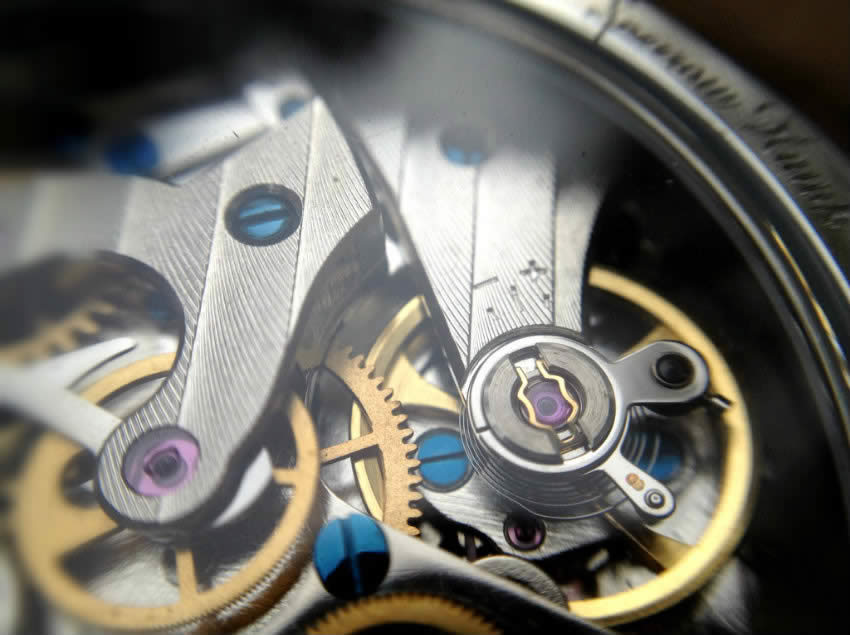

Published specifications and measurement limits
| Characteristic | ETA 2892A2 | Sea-Gull TY2661/ST1812 |
|---|---|---|
| Diameter as described | 25.60 mm | Approx. 26.20 mm maximum diameter; a different stated measurement basis |
| Movement height | 3.60 mm | Approx. 3.91 mm |
| Jewels | 21 | 24 |
| Frequency entry | 28,800 vibrations/hour; 4 Hz | 28800; the product field does not spell out the unit |
| Reserve in the listing | Typical 50 hours | 42 hours |
| Display and setting features | Three central hands, date and stop-seconds | Three central hands, date at 3 o'clock and stop-seconds |
The 2019 ETA 2892A2 technical communication instead gives 42 hours. When comparing an older ETA example, use its applicable documentation rather than automatically treating the current 50-hour listing as its specification. The 2892 family reference explains the dated records.
What the differences mean for a decision
| Difference | Useful conclusion | Decision that still needs evidence |
|---|---|---|
| 3.60 mm versus approximately 3.91 mm height | The ETA entry is about 0.31 mm lower, relevant where movement space is tight. | The thickness of the assembled watch and clearance for its hands or caseback. |
| Diameter versus maximum-diameter wording | Obtain matched case-fitting dimensions before selecting a holder or replacement. | Whether either movement will sit securely in the existing case. |
| 21 versus 24 jewels | The bearing arrangements need their own parts documentation. | A ranking for daily accuracy, durability or service life. |
| Current 50-hour typical reserve versus a 42-hour listing | The current ETA specification offers a larger stated running-time allowance. | Which actual watch runs longer after an equivalent documented wind. |
For a new watch with limited movement space, the ETA height is the relevant published advantage. For routine ownership, an identified movement with accessible service and documented behaviour is more useful than a higher jewel count. For a replacement project, the dimensions above are only the starting point.
Can an ST1812 replace a 2892A2?
The records used here are insufficient to confirm a direct replacement. Give the watchmaker both full references and the case configuration. These five matches decide whether a proposed conversion is feasible:
| Required match | Question for the repairer | Result or drawing reference |
|---|---|---|
| Stem height | Does the winding stem align with the existing crown tube? | — |
| Hand-fitting dimensions | Will the existing hands fit and clear the dial and crystal? | — |
| Dial attachment | Are the dial feet and their fixing arrangement compatible? | — |
| Calendar alignment | Does the date display align with the dial aperture? | — |
| Holder and case clearance | Can the movement be secured with adequate rotor and caseback clearance? | — |
A similar exterior does not answer these fitting questions. A proposed change that requires a new dial, hands or holder also changes the repair's cost and scope. The result cells above are intentionally unfilled.
Record the actual watch before choosing
| Item | Details to record | Your result |
|---|---|---|
| Identity | Actual maker, full reference and identification evidence | — |
| Rate | Observation dates, duration, winding state, worn/resting positions and measured difference | — |
| Timing-machine report | Unit identity, position, rate, beat error, amplitude and lift-angle setting | — |
| Reserve | Winding procedure, start time and stop time | — |
| Service plan | Repairer's acceptance, parts availability, work included and quote | — |
Only compare rate or reserve results taken under stated, reasonably comparable conditions. Without those results, the fair conclusion is a dimensional and specification comparison with an unresolved performance ranking. Use the quality checklist for the separate case, bracelet and support decisions.